Type: Publications

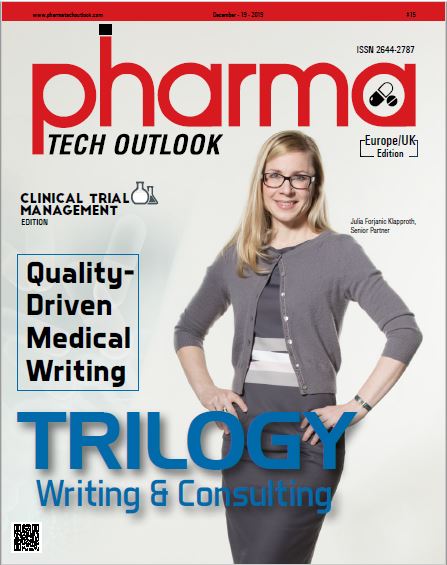
Cover-Pharma-Tech-Outlook
Quality-Driven Medical Writing
For years, the clinical drug development industry has been waging war against the surging drug development costs and tediously long processes. More efficient decision making during drug development would be...
Author: Stacey Smith
Journal: Pharma Tech Outlook, Clinical Trial Management Edition
Date: December 2019
OCT-Handbook-Cover-2020
The Lay Summary – Remember the Reader
In 2014, as part of its Clinical Trial Transparency initiative, the EMA mandated a requirement (CTR EU No 536/2014) for clinical trial sponsors to prepare a summary of the results of every clinical trial written in language understandable to lay persons (plain language) no later than one year after the end of the trial in the EU. These CTR lay summaries will be made available in a new EU database; it was planned for 2018, but it is likely that it will not now be implemented before 2020.
Author: Lisa Chamberlain James and Barry Drees
Journal: Outsourcing in Clinical Trials Handbook 2020
Date: 2020
emwa-2019
Lay Summaries and Writing for Patients: Where Are We Now and Where Are We Going?
We examine the trend for increasing and more transparent patient information and ask how close we have come in the last few years to producing useful and meaningful information for patients. We also outline the challenges faced by medical writers and the pharmaceutical industry as a whole in trying to comply with recent European requirements for the creation of lay summaries of key regulatory submission documents.
Author: Lisa Chamberlain James and Trishna Bharadia
Journal: Medical Writing, the journal of EMWA
Date: Vol. 28 No. 3, September 2019
Generics and Biosimilars
Biosimilar Development – An Overview
Biosimilars are biological drugs that are similar to, and cheaper than other biological drugs (called “reference originator biologics”) that are already in use. They share an identical amino-acid sequence but, given the inherent variability of biological molecules, not full “sameness”.
Author: Diana Radovan
Journal: Medical Writing, the journal of EMWA
Date: Summer 2019
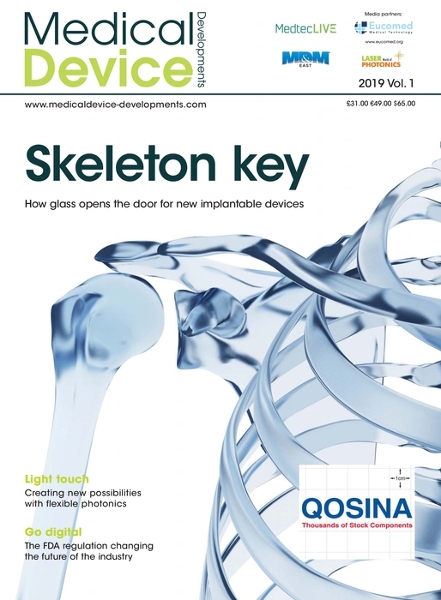
MedDevDev
Strategic medical writing for device submissions
Julia Forjanic Klapproth of Trilogy Writing & Consulting GmbH elucidates how it’s time to start using strategic medical writing in the world of device submissions. Until recently, the documents needed...
Author: Julia Forjanic Klapproth
Journal: Medical Device Developments
Date: 2019, Volume 1
TOPRA
The challenges of producing periodic benefit–risk evaluation reports
This article discusses the challenges of producing a periodic benefit–risk evaluation report (PBRER) from a writing perspective. It explains that by taking into consideration the most common pitfalls encountered by...
Author: Lisa Chamberlain James and Stephanie Millican
Journal: Regulatory Rapporteur
Date: Vol. 16, Issue 5, May 2019
AMWA-journal-232x300
How to Build a Medical Writer: Medical Writing Apprenticeships - New Training for a New Breed
Everyone involved in preparing regulatory documentation in the pharmaceutical industry is always on a desperate look out for excellent medical writers with years of experience writing the documents they need....
Author: Julia Forjanic Klapproth and Lisa Chamberlain James
Journal: AMWA Journal
Date: Vol. 34, No. 2, Summer 2019
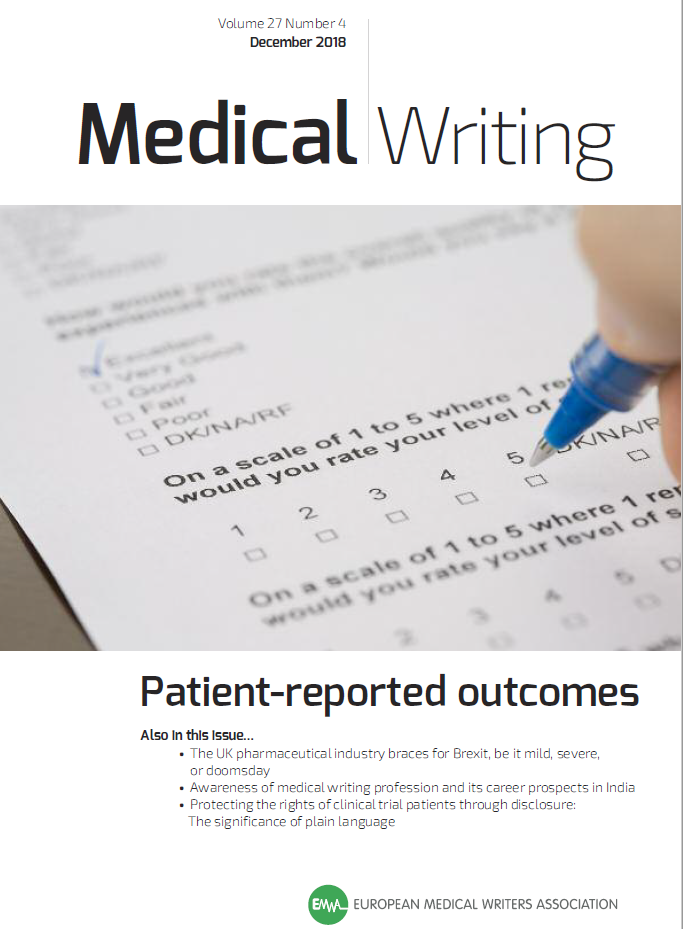
EMWA-Journal-27-4
Help Reviewers Tell You What They Want
Review is an integral part of the medical writing process and relies on clear communication between the medical writer and the reviewer(s). This is a two-way street. Review can be...
Author: Diana Radovan
Journal: Medical Writing, the journal of EMWA
Date: Vol. 27 No. 4, December 2018
EMWA-Journal
Getting the most out of quality control specialists: Practical guidance for medical writers
Quality control (QC) is a process that usually occurs when a document is in a near-final or final state. It involves the checking of documents by QC specialists against source...
Author: Claire Jones
Journal: Medical Writing, the journal of EMWA
Date: Vol. 27, No.3, September 2018
JCS-Vol-10-Issue-4
Writing Pediatric Study Plans (PSPs) - The Impact of the Revised 2016 FDA Draft Guidance
An initial Pediatric Study Plan (iPSP) is an outline of the paediatric study or studies that the drug development sponsor plans to conduct in the US to confirm the suitability...
Author: Diana Radovan and Rachel Beeby
Journal: Journal for Clinical Studies
Date: 2018 - Volume 10 - Issue 4
medical-device-developments-journal
Getting the Writing Right
Gerry McGregor, a principal medical writer at Trilogy Writing & Consulting, explains how experienced medical writers can help medical device manufacturers to meet the new regulatory demands of producing clinical...
Author: Gerard McGregor
Journal: Medical Device Developments
Date: 2018 - Volume 2
emwa mouse
The reproducibility crisis in preclinical research - lessons to learn from clinical research
In recent years, the robustness and reproducibility of preclinical data have been a topic for discussion. Quality standards and good practices are often not well defined for different in vitro...
Author: Laia Pedro-Roig
Journal: Medical Writing Volume 26, Number 4
Date: December 2017
Journal for Clinical Studies FC
The Lay Summary - Remember the Reader
As part of its Clinical Trial Transparency initiative, the EMA mandated a requirement for clinical trial sponsors to prepare a summary of the results of every clinical trial written in language understandable to lay persons (patients and others not in the pharmaceutical industry). The regulation (CTR EU No 536/2014) obliges the company to produce this summary of results for the lay audience one year after the end of the trial in the EU.
Author: Lisa Chamberlain James and Barry Drees
Journal: Journal for Clinical Studies
Date: Dec 2017, Vol. 9, No. 6
Medical Writing
Regulatory submissions of non-interventional post-authorisation safety studies: Challenges for data interpretation and comparisons with clinical data
The post-authorisation safety study (PASS) is a pharmacovigilance activity often required as a post-marketing commitment to establish a safety profile or address specific safety concerns. An imposed PASS must be...
Author: James Visanji
Journal: Medical Writing, the journal of EMWA
Date: Vol. 26, No. 3, September 2107
WorldPharma-2017-Vol-1-724x1024
You Get What You Give
Julia Forjanic Klapproth, co-founder of Trilogy Writing & Consulting, explains how to prepare good requests for information and proposals in the field of medical writing. If you have ever been...
Author: Julia Forjanic Klapproth
Journal: Clinical Trials Insight
Date: Summer 2017
Medical-Writing-Cover-722x1024
The Pharmacovigilance Medical Writer: Medical Writer, Project Manager, Regulatory Expert
Pharmacovigilance is a critical element of drug development and marketing. The evaluation and monitoring of patient safety and a drug’s benefit/risk is a highly regulated global task, which is required...
Author: Sven Schirp and Lisa Chamberlain James
Journal: Special Edition of International Clinical Trials, ICT
Date: February 2017
Medical-Writing-Cover-722x1024
The Challenge of CTD Submissions and Responding to Questions from the Authorities
The Common Technical Document is an international standard for the summary documents needed to obtain regulatory approval of medicinal products. These summary documents involve presenting key information drawn from a...
Author: Douglas Fiebig
Journal: Special Edition of International Clinical Trials, ICT
Date: February 2017
Medical-Writing-Cover-722x1024
Medical Writing: The Backbone of Clinical Development
This special edition is meant to increase the general awareness of the need for good documentation on the one hand and to provide good medical writing practices and tricks of the trade on the other hand. It is intended to have lasting value as a reference book for the target audience – medical writers and everyone in the pharmaceutical industry working with medical writers.
Journal: Special Edition of International Clinical Trials, ICT
Date: February 2017
Medical-Writing-Cover-722x1024
Streamlining Clinical Study Protocols and Reports
Recent pharma initiatives have been established to help ensure that clinical study protocols and reports are always presented in a similar way, making for easier assimilation and assessment. This article...
Author: Julia Forjanic Klapproth and Sam Hamilton
Journal: Special Edition of International Clinical Trials, ICT
Date: February 2017
Medical-Writing-Cover-722x1024
What you Need and When – The Key Documents in the Drug Lifecycle
Clinical development is a complex and expensive undertaking, involving many years of research that culminate with clinical trials, the objectives and results of which all have to be documented. This...
Author: Julia Forjanic Klapproth
Journal: Special Edition of International Clinical Trials
Date: February 2017